The Nearest Concussion Specialist Might Be Hours Away. Telehealth Closes That Gap.
The nearest concussion specialist may be hours away. See why telehealth closes that gap and why the wait itself can hurt recovery.
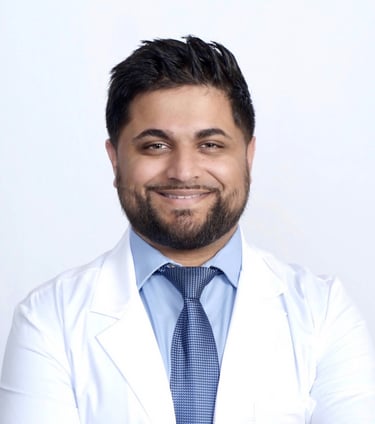
Shan Patel, PsyD
8/17/20264 min read


It's Friday night. Your daughter takes a hit during the game, comes off the field holding her head, and by Saturday morning she's got a headache that won't quit and can't look at her phone without wincing. You call around Monday morning and find out the nearest doctor who actually specializes in concussion management (not just a general pediatrician who'll say "rest and see how it goes") is a three-hour drive away, and the soonest opening is in two and a half weeks.
That gap is real, and it's more common than most families realize. Clinicians trained specifically in sports concussion management are concentrated in a small number of academic and sports medicine centers, mostly in or near major cities. Research on pediatric concussion care has specifically flagged geography as a limiting factor in whether young athletes reach specialty care at all[1]. If you don't live near one, you're left choosing between a long wait, a long drive, or care from someone without concussion-specific training, right during the window when getting it right matters most.
Why the delay itself is the problem
Concussion outcomes aren't just about what happens the moment of injury. They're shaped by what happens in the days right after: how activity is managed, when it's safe to return to school and sport, and whether early red flags get caught.
This isn't a hunch. It's measurable. A 2024 study of 856 patients published in BMC Sports Science, Medicine and Rehabilitation found that patients evaluated at a specialty concussion clinic within 48 hours of injury recovered in an average of 15.1 days, compared to 21.1 days for those evaluated a week or more out, nearly a week faster[2]. That same study found patients seen within 48 hours were over four times more likely to have a normal recovery (21 days or less) than those seen later.
Two and a half weeks of uncertainty, guesswork, or no guidance at all isn't a neutral delay. It's time where a kid might go back to practice too soon, or sit out school unnecessarily long because no one gave the family a real plan, and the data suggests that time comes with a real, measurable cost.
This is the actual cost of the access gap: not inconvenience, but worse outcomes for entirely fixable reasons.
What telehealth actually changes
Telehealth doesn't ask a family to settle for less. It asks a different question: does this specific kind of care require being in the same room, or does it require being in front of the right clinician? For the large majority of concussion management, it's the second one.
That reframe is what makes it accessible in a way that matters, not just convenient in a way that's nice to have:
A family in a small town gets the same specialist a family two blocks from a major sports medicine center would get, same day if needed, instead of in three weeks.
A parent doesn't have to take a full day off work and pull a symptomatic kid out of a dark, quiet room and into a car for a two-hour round trip just to be told what activities to avoid this week.
A teenager who's light and motion sensitive doesn't have to sit under fluorescent lights in a waiting room to get evaluated by someone who actually knows what they're looking at.
None of that is about lowering the bar for care. It's about removing the parts of the old system that had nothing to do with quality: the geography, the driving, the waiting. Those were never actually part of what made the care good in the first place.
Is a virtual exam actually as good?
It's a fair question, and it's been studied directly. A 2024 validation study in Neurology: Clinical Practice compared a standardized virtual concussion exam to the same exam done in person and found excellent agreement between the two, a reliability score of 0.95 when the same clinician performed both, with about 86% of individual exam components showing strong agreement across formats[3]. Separately, a Neurology-published study on telemedicine concussion care found that going virtual didn't impair treatment outcomes compared to in-person care[4].
That's the difference between telehealth as a workaround and telehealth as a genuinely equivalent option for most of the concussion care journey.
The honest caveat
Telehealth isn't the answer to every part of concussion care. Some elements of a full workup genuinely require an in-person exam, and any red flags (worsening headache, repeated vomiting, confusion, seizure) mean the ER, not a video call. But for the ongoing evaluation and management that makes up most of the concussion recovery process, distance no longer has to be the deciding factor in whether a family gets specialized care at all.
If your child or a loved one is dealing with a suspected concussion, same-day telehealth evaluations are available, no matter how far you are from the nearest specialist. [Schedule a visit] to get started.
References
Powers R, Trevino R, Erpenbach H, Thomas D. Is Access to Optimal Concussion Care for Pediatric Athletes Limited by Geography? Clinical Journal of Sport Medicine. 2024;34(5):425-429.
Mathew AS, Caze T II, Price AM, Vasquez D, Abt JP, Burkhart SO. Association Between Days for Concussion Recovery and Initial Specialty Clinic Evaluation Within 48 Hours. BMC Sports Science, Medicine and Rehabilitation. 2024;16(1):75.
Jack AI, Digney HT, Bell CA, et al. Testing the Validity and Reliability of a Standardized Virtual Examination for Concussion. Neurology: Clinical Practice. 2024;14(5):e200328.
Mannix N, Finn J, Weber KD, Sas AR. Telemedicine Option for Concussion Care Does Not Impair Treatment Options (P4-12.008). Neurology. 2025;104(7_Supplement_1):5870.
About the author:
Shan Patel, PsyD, is a neuropsychologist and concussion specialist who completed his fellowship through the UPMC Sports Medicine Concussion Program. He is the Owner and CEO of the Patel Concussion Institute (PCI), a telehealth-based practice serving patients nationally via PSYPACT, and serves as Clinical Director of the University Orthopedic Care, Concussion Program, and Integrative Behavioral Health Program, overseeing operations across 14 hospital-based clinics in Florida.